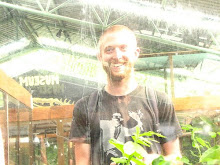
Bottle of water at the bottom of the world´s second deepest canyon, where there is no electricity or roads: $3
Mule ride to the top of the canyon, for those too tired to hike back up: $12
Egyptian anti-food poisoning pills, after getting food poisoning the first meal of the tour: Priceless
(Thank you Franic)
Thursday, January 31, 2008


America vs The World
Eighteen and female, traveling alone in Ecuador, Peru and Bolivia. American? Not a chance. But for Europeans, it´s not uncommon. With the so called 'Gap Year', a break between high school and college, you´re almost expected to travel somewhere and teach yourself personal responsibility. Thats one of the big differences I´ve noticed between people I´ve met. Not only do Europeans travel here more (with a stronger currency and perhaps a less violent perception of the continent), they travel here much younger.
I can hardly imagine being alone in a foreign land and still being a teenager. Yet I´ve met people traveling much longer and farther than myself-- up to a year at a time, covering the whole world-- who couldn´t legally drink here in the US.
But although this trip has highlighted a lot of the ways we´re different, it´s also highlighted some ways we´re similiar. We´ve all seen shows on TV demonstrating America´s geographic ignorance; a talk show host asking a person off the street to locate Japan on a map, and then the audience laughing (maybe nervously) when they can´t. For the longest time I assumed this was an American problem. But no-- it´s a world problem. I´ve asked Australians, Israelis and Germans how many states are in the US, and not gotten a single right answer. One person tried to argue that there were 50 states, until Alaska and Hawaii. Not that I know how many German provinces there are (14 or 15, the German in my group wasn´t sure of that either)-- but it surprised me because the world knows our language, it knows our television shows and our pop music-- but it doesn´t know us.
Maybe the world isn´t a small place after all.
I can hardly imagine being alone in a foreign land and still being a teenager. Yet I´ve met people traveling much longer and farther than myself-- up to a year at a time, covering the whole world-- who couldn´t legally drink here in the US.
But although this trip has highlighted a lot of the ways we´re different, it´s also highlighted some ways we´re similiar. We´ve all seen shows on TV demonstrating America´s geographic ignorance; a talk show host asking a person off the street to locate Japan on a map, and then the audience laughing (maybe nervously) when they can´t. For the longest time I assumed this was an American problem. But no-- it´s a world problem. I´ve asked Australians, Israelis and Germans how many states are in the US, and not gotten a single right answer. One person tried to argue that there were 50 states, until Alaska and Hawaii. Not that I know how many German provinces there are (14 or 15, the German in my group wasn´t sure of that either)-- but it surprised me because the world knows our language, it knows our television shows and our pop music-- but it doesn´t know us.
Maybe the world isn´t a small place after all.
Secondhand Horror Story
At an english restaurant in Cuzco our waiter-- who didn´t actually work there, but filled in for the owners when they needed time off-- told me this story. And it was in english, so there was nothing lost in translation.
When the owners of the restaurant got married, they took a month off to travel to England for the wedding and then for the honeymoon. The first night our waiter was in charge, the head chef died-- not in the restaurant, but in the hospital-- from gall stones. The day before surgery you´re not allowed to eat, because it can complicate the surgery; for four weeks the chef was told he would be operated on the following day, and for four weeks he wasn´t allowed food-- until he finally died from malnutrition.
When the owners of the restaurant got married, they took a month off to travel to England for the wedding and then for the honeymoon. The first night our waiter was in charge, the head chef died-- not in the restaurant, but in the hospital-- from gall stones. The day before surgery you´re not allowed to eat, because it can complicate the surgery; for four weeks the chef was told he would be operated on the following day, and for four weeks he wasn´t allowed food-- until he finally died from malnutrition.
Sunday, January 27, 2008
Thieves and Liars in Cuzco
Cuzco is a beautiful city, let me say that first and foremost. But the tourist district-- being the hub for tours to Maccu Picchu, the most visited place in all South America-- is so heavily saturated with people trying to make a buck that literally every other person you pass in the street is offering you something: wool hats, matches, cameras, lunch, dinner, drugs, massages, tours, better prices than everyone else. And the easiest way to stand out is just to lie about what you're selling, to make it seem worth every last gringo dollar. The following is a guide to 'Cuzcospeak' based on my trip to Maccu Picchu (which was amazing and worth every dollar I should add).
--So if I leave tomorrow, how many people are in my group?
It'll be six people total, plus a guide of course. You and 5 girls, four of which are brazilian. Very good people. (Of the 26 people in your group, some of them will be from Brazil. I think one is female, I can't remember. Very good people.)
--The first day is mountain biking, right? Is the equipment good? Is there traffic on the road? How many hours is the ride?
The ride lasts about 4 or 5 hours; we stop at two important archaelogical sites along the way. The bikes are very good, good Shimano components. Only a few local buses travel on the road. (If we give you equipment, it will be crap {I'll put a photo of my bike online later, which I'm pretty sure was taped together. I also got two left-handed gloves.}. Chains will break, wheels will come off, seatposts will snap, gears will refuse to change. The ride is about 2 hours total, plus a few hours of waiting for people with broken bikes to walk to the meeting point. You'll see lots of culture, but nothing from Incan times. And aside from buses, you need to watch out for chickens, ducks, turkeys, pigs, sheep, kids playing and old people standing in the street. {After the world's most dangerous road, this ride was a piece of cake-- and my duct tape princess bike rode like a champ, carrying me to victory at the bottom of the mountain. Although I was reminded that this was 'an adventure, not a competition'}
--What isn´t included in the price? Should I bring money?
Everything except entrance to the hot springs is included. You can buys snacks if you want. (Bring money because breakfast might be a bun with a piece of cheese on it, and a juice box. And if you order the cheese omelette for dinner, not only will you not get cheese, but you won't get french fries either. And you'll want to buy a giant bottle of coke with every meal to share with people, since you'll get pretty thirsty after 9 hours of hiking in the jungle.)
--What time do we leave for the ruins? How long are we there? When is the train back to Cuzco?
We'll leave for the ruins at 4am to see the sun rise over the sungate. There is a two hour guided tour, and then you have the rest of the day free. You can leave on whichever train you like, probably getting back to Cuzco around 9 at night. (You'll wake up at 4am, but you'll never leave that early. Your group is too large. Not to mention, there won`t be enough beds at the last hotel, so the group will be have to be split up. It`s ok though, it`ll be raining when the sun comes up, so you won`t miss anything. You get to hike up 3,000 stairs, wait for everyone; fill out your name and country on your ticket-- one pen for 26 people, so more waiting-- and then get your tour. Be back in town at 4pm to pick up your train ticket. We`ve given you the fake name Guillermo Grasso, so don`t show anyone on the train your passport. And to save money you`re getting off halfway to Cuzco, and then look for someone with a sign saying `Julia Tours`-- no that`s not my company, but it's ok. Just follow everyone else; they`ll call everyone but your name on the bus, but just play along. Oh, and plan on waiting on the bus for about 45 minutes, since the terminal is a cage and the buses are arranged like tetris pieces. You`ll get to Cuzco sometime before midnight.)
--So if I leave tomorrow, how many people are in my group?
It'll be six people total, plus a guide of course. You and 5 girls, four of which are brazilian. Very good people. (Of the 26 people in your group, some of them will be from Brazil. I think one is female, I can't remember. Very good people.)
--The first day is mountain biking, right? Is the equipment good? Is there traffic on the road? How many hours is the ride?
The ride lasts about 4 or 5 hours; we stop at two important archaelogical sites along the way. The bikes are very good, good Shimano components. Only a few local buses travel on the road. (If we give you equipment, it will be crap {I'll put a photo of my bike online later, which I'm pretty sure was taped together. I also got two left-handed gloves.}. Chains will break, wheels will come off, seatposts will snap, gears will refuse to change. The ride is about 2 hours total, plus a few hours of waiting for people with broken bikes to walk to the meeting point. You'll see lots of culture, but nothing from Incan times. And aside from buses, you need to watch out for chickens, ducks, turkeys, pigs, sheep, kids playing and old people standing in the street. {After the world's most dangerous road, this ride was a piece of cake-- and my duct tape princess bike rode like a champ, carrying me to victory at the bottom of the mountain. Although I was reminded that this was 'an adventure, not a competition'}
--What isn´t included in the price? Should I bring money?
Everything except entrance to the hot springs is included. You can buys snacks if you want. (Bring money because breakfast might be a bun with a piece of cheese on it, and a juice box. And if you order the cheese omelette for dinner, not only will you not get cheese, but you won't get french fries either. And you'll want to buy a giant bottle of coke with every meal to share with people, since you'll get pretty thirsty after 9 hours of hiking in the jungle.)
--What time do we leave for the ruins? How long are we there? When is the train back to Cuzco?
We'll leave for the ruins at 4am to see the sun rise over the sungate. There is a two hour guided tour, and then you have the rest of the day free. You can leave on whichever train you like, probably getting back to Cuzco around 9 at night. (You'll wake up at 4am, but you'll never leave that early. Your group is too large. Not to mention, there won`t be enough beds at the last hotel, so the group will be have to be split up. It`s ok though, it`ll be raining when the sun comes up, so you won`t miss anything. You get to hike up 3,000 stairs, wait for everyone; fill out your name and country on your ticket-- one pen for 26 people, so more waiting-- and then get your tour. Be back in town at 4pm to pick up your train ticket. We`ve given you the fake name Guillermo Grasso, so don`t show anyone on the train your passport. And to save money you`re getting off halfway to Cuzco, and then look for someone with a sign saying `Julia Tours`-- no that`s not my company, but it's ok. Just follow everyone else; they`ll call everyone but your name on the bus, but just play along. Oh, and plan on waiting on the bus for about 45 minutes, since the terminal is a cage and the buses are arranged like tetris pieces. You`ll get to Cuzco sometime before midnight.)
Peruvian Politics
Graffiti is rampant thoughout South America, but in Peru you see a phenomenon unique to the country. A long bus ride will show you that every house, storefront, bridge, wall-- any flat surface facing the road is transformed into a political advertisement. And it's all local politics; so and so for mayor, he supports public works. Roads, potable water; anything to bring an increase in the quality of life (and hopefully work too). It's interesting to see a country so engaged in their political process.
Sunday, January 20, 2008
Is Bolivia Dangerous?
The morning before I left La Paz, I talked with my hotel´s owner (whose brother lives in Raleigh, oddly enough) about perceptions of Bolivia. He lamented the fact that Americans supposed the country was dangerous, and therefore stayed away. Indeed, when I crossed into Bolivia, the guards told me only about 20 Americans a month came through the border at Uyuni; I never met another American while I was in Bolivia.
In touristed areas, there are signs posted everywhere proclaiming that 'Bolivia is a safe country'; and I tend to agree-- to an extent. Leaving La Paz for Lake Titicaca, we stopped at the scene of an accident. A bus had gone off the road and tumbled down a hill, killing ten passagers. In a country as poor as Bolivia, safety features so common as guardrails are unheard of; it is this poverty that makes the country dangerous, for tourists and citizens alike.
I told the hotel owner that I thought things would soon change for Bolivia. Already tourists are flocking to Colombia, and if that country can shed its violent image, then Bolivia-- with all its natural wonders, and embracing people-- can hardly be far behind. I can only hope that some of those tourist dollars will go towards making the country safer for everyone.
In touristed areas, there are signs posted everywhere proclaiming that 'Bolivia is a safe country'; and I tend to agree-- to an extent. Leaving La Paz for Lake Titicaca, we stopped at the scene of an accident. A bus had gone off the road and tumbled down a hill, killing ten passagers. In a country as poor as Bolivia, safety features so common as guardrails are unheard of; it is this poverty that makes the country dangerous, for tourists and citizens alike.
I told the hotel owner that I thought things would soon change for Bolivia. Already tourists are flocking to Colombia, and if that country can shed its violent image, then Bolivia-- with all its natural wonders, and embracing people-- can hardly be far behind. I can only hope that some of those tourist dollars will go towards making the country safer for everyone.
The Coca Museum in La Paz
The Coca Museum in La Paz was created as an educational extension of the anti-narcotics efforts of Bolivia, the United States and the United Nations. But rather than exist as a tirade against the use of cocaine (which the museum staunchly opposes), it provides a compelling argument for the continued farming of coca throughout Bolivia. The argument necessarily brings in the fascinating history of the Bolivian highlands, to which coca is inextricably entwined (and which I´ll try to summarize below).
-Archaeologists have discovered that Andean cultures chewed coca leaves as much as 4,500 years ago; more than 2,000 years before Christ.
-The chewing of coca leaves causes a reaction in the body in which oxygen is absorbed by the lungs more efficiently; obviously this is helpful at the extreme altitudes of the Andes.
-During Colonial times, the Catholic Church banned the use of coca leaves, having determined it was 'an obstacle to Christianity'. But when it was learned that miners at Potosi (the sole source of income for the Spanish Empire) chewing coca leaves could work longer hours before succumbing to exhaustion, it was quickly made mandatory and heavily taxed-- making workers even more in debt to the empire.
-Today, more than 90% of men in the Yungas region of Bolivia chew coca leaves (my bus driver was eating them like a bag of potato chips).
-In the late 1800´s cocaine was developed as a medical anesthetic; supposedly Freud was the first user.
-Coca Cola contained cocaine until 1912.
-Certain countries are allowed to legally produce cocaine; the US is the largest producer of legal cocaine, and is produced by a subsidiary of Coca Cola.
-Coca Cola is still flavored with Bolivian coca leaves to this day.
-To produce cocaine requires large amounts of chemicals you don´t find in the jungle; these are knowingly imported by western corporations.
-The US consumes half of the world´s cocaine.
-Archaeologists have discovered that Andean cultures chewed coca leaves as much as 4,500 years ago; more than 2,000 years before Christ.
-The chewing of coca leaves causes a reaction in the body in which oxygen is absorbed by the lungs more efficiently; obviously this is helpful at the extreme altitudes of the Andes.
-During Colonial times, the Catholic Church banned the use of coca leaves, having determined it was 'an obstacle to Christianity'. But when it was learned that miners at Potosi (the sole source of income for the Spanish Empire) chewing coca leaves could work longer hours before succumbing to exhaustion, it was quickly made mandatory and heavily taxed-- making workers even more in debt to the empire.
-Today, more than 90% of men in the Yungas region of Bolivia chew coca leaves (my bus driver was eating them like a bag of potato chips).
-In the late 1800´s cocaine was developed as a medical anesthetic; supposedly Freud was the first user.
-Coca Cola contained cocaine until 1912.
-Certain countries are allowed to legally produce cocaine; the US is the largest producer of legal cocaine, and is produced by a subsidiary of Coca Cola.
-Coca Cola is still flavored with Bolivian coca leaves to this day.
-To produce cocaine requires large amounts of chemicals you don´t find in the jungle; these are knowingly imported by western corporations.
-The US consumes half of the world´s cocaine.
Subscribe to:
Posts (Atom)